
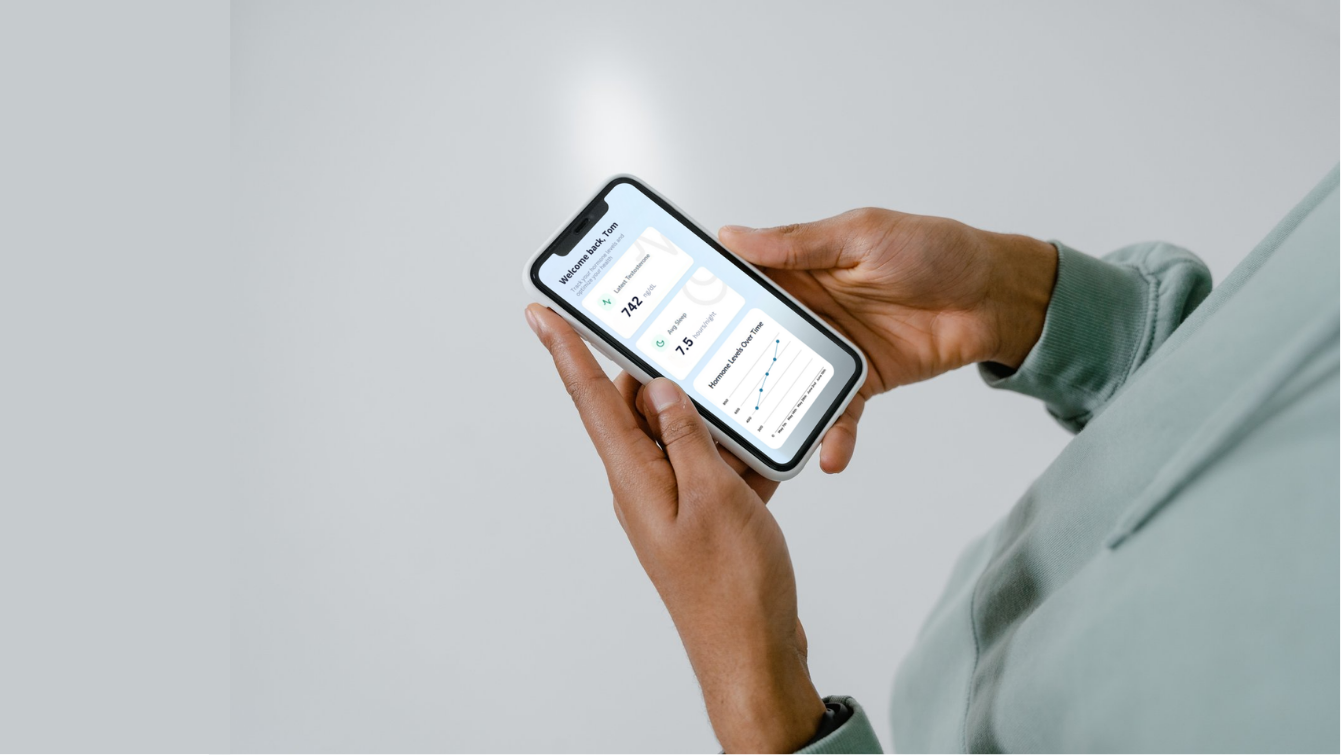
At-Home Testosterone Test
Get quantitative testosterone results in just 10 minutes — no lab visits, no mail-in kits
10 Minute Results, No Lab Required
Move beyond one-time lab snapshots. Monitor your testosterone over time with fast, quantitative, fully at-home testing.
-
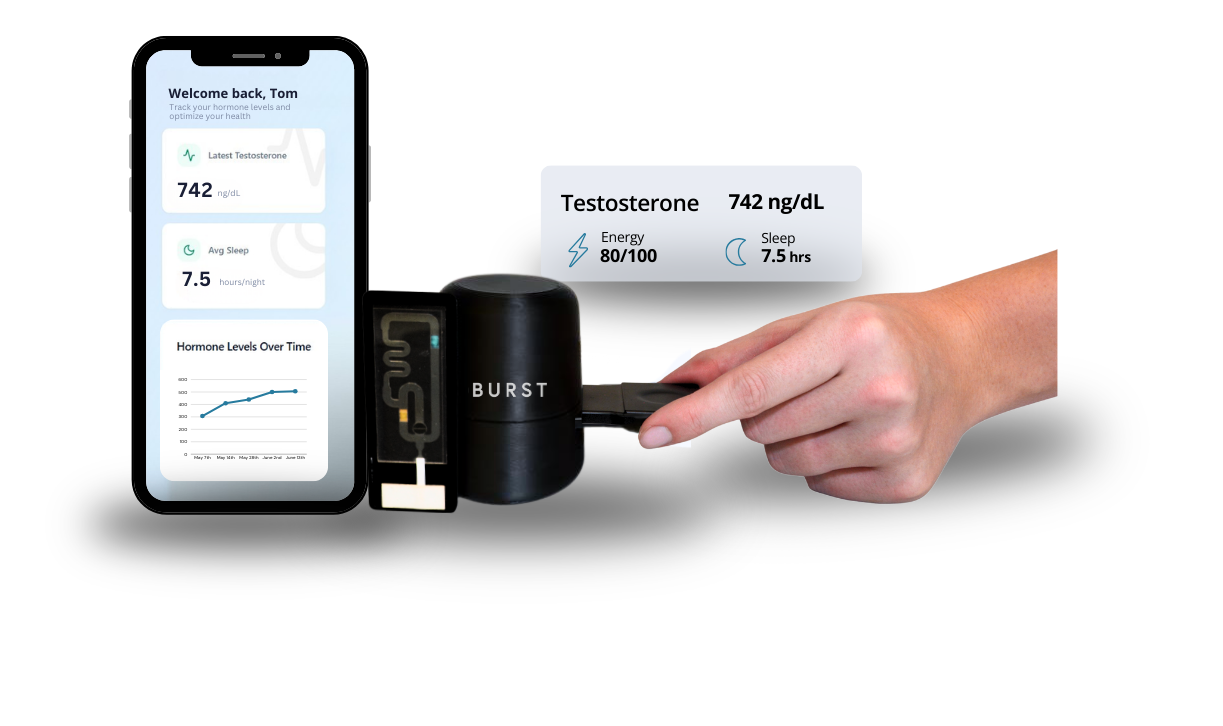
Each test produces a numerical result that you can use to track trends overtime. The dedicated reader digitally analyzes the assay signal, reducing variability and eliminating the subjectivity common in visually interpreted strip tests. This allows for more consistent measurements across repeated tests, helping you monitor trends with confidence.
-
Our testosterone test runs on CaDI, a next-generation technology built for greater accuracy. It’s 100 times more accurate than traditional rapid tests, enabling lab-quality results in an easy-to-use format.
-
Testosterone levels shift with sleep quality, stress load, training intensity, and nutrition. A convenient at-home result allows you to monitor trends over time rather than relying on a single isolated reading, making the system ideal for repeat measurement and lifestyle optimization.
-
No lab visits. No mail-in samples. No external processing.
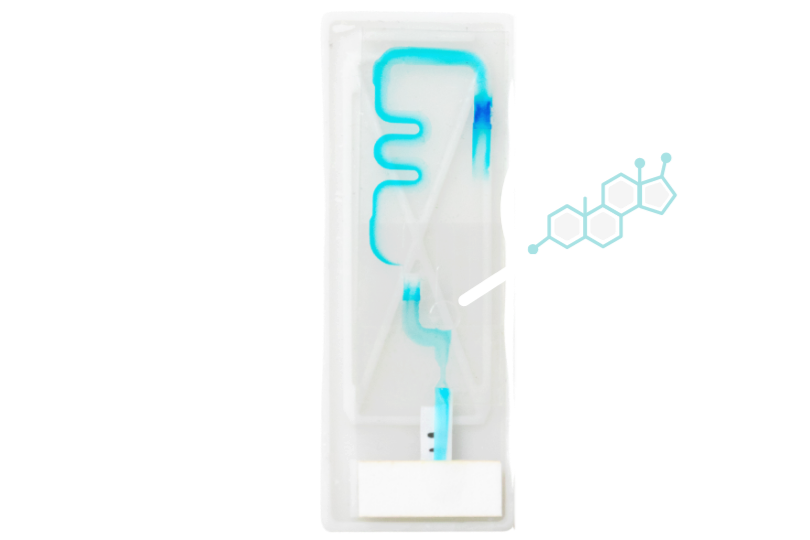
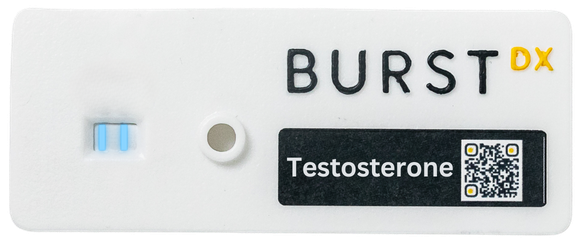
Everything needed to run the test is included in the kit. The assay runs inside a sealed cartridge, and the reader generates your result in minutes. This allows you to stay in control of when and how you test, without depending on third-party labs or delayed reporting. -
High sensitivity doesn’t have to come with complexity. Our test uses a straightforward workflow that makes precise testing simple and efficient. The paired app walks you through each step, captures your results in real-time, and helps you track changes so improving your health feels intuitive from start to finish.
-
The reader seamlessly pairs with a dedicated app, giving you instant access to your testosterone results from your smartphone. You can track trends over time, compare past results, and visualize how your levels change. The app also allows you to log sleep, training, nutrition, and other lifestyle factors alongside each result. By combining precise measurements with real-world context, you gain a clearer understanding of what is influencing your testosterone levels and how to adjust accordingly.
-
Cartridges are inserted into a dedicated reader that captures the test signal and converts it into a precise testosterone value displayed in the app. Instead of relying on faint lines or visual guesswork, the reader measures the chemiluminescent signal produced by the test, allowing for much higher sensitivity and consistency than traditional rapid tests.
Testosterone Changes. Your Testing Should Too.
Testosterone is a critical hormone in men’s health, influencing energy, body composition, bone density, cognition, mood, libido, sleep quality, and overall vitality. Because it plays a role in so many systems at once, even gradual shifts can affect how you feel, recover, and perform over time.
There are two primary forms of testosterone to understand: total testosterone and free testosterone. Total testosterone is defined as the entire amount in the body, including both the portion bound to proteins and the smaller unbound portion. Approximately 98 percent of testosterone is bound to proteins such as albumin or sex hormone-binding globulin (SHBG). Free testosterone represents the remaining unbound portion that’s considered biologically active, meaning it is readily available for the body to use.
Testosterone levels typically peak during adolescence and early adulthood, then gradually decline with age for many men. Research suggests levels decrease on average by about 1 to 2 percent per year after age 30. Declining testosterone levels may be associated with symptoms such as fatigue, reduced muscle mass, lower libido, and decreased overall vitality for some men.
Natural Fluctuations Over Time
Importantly, testosterone is not static. Levels fluctuate broadly with age, but they also vary throughout a single day. In most men, testosterone peaks in the early morning, typically between 7–10 a.m., and declines throughout the afternoon and evening. Various activities, such as sleep quality, stress, or activity levels, can further influence production. Due to these natural fluctuations, aligning testing with peak timing is important for obtaining meaningful results.
Limitations of Traditional Testing
Despite natural variability, many individuals measure their testosterone levels only occasionally. If testing requires travel, shipment logistics, or higher costs, it's often less convenient to perform regularly. As a result, many men only test a few times per year, if at all. With limited data points, it becomes difficult to observe trends or understand how lifestyle changes may be influencing hormone levels over time.
CaDI: Better Hormone Insights
Many “at-home” kits still require lab send-out, cost $60–$150 or more per test, and take days to weeks for results. These barriers limit repeat testing, making frequent monitoring impractical.
Our fully at-home testosterone test eliminates these barriers. CaDI allows you to retest on your schedule from home and monitor how sleep, stress, training, and lifestyle choices are impacting your hormone levels.
Understanding The Impact of Testosterone

Energy
Testosterone helps signal the production of red blood cells and influences metabolic processes linked to energy. Testosterone also supports mitochondrial function, allowing the body to convert nutrients more efficiently into energy. Low testosterone levels are linked to sleep quality, which can contribute to fatigue in some men.

Muscle Mass
Testosterone plays a key role in building and maintaining muscle by promoting protein synthesis that supports lean body composition. Studies indicate that higher testosterone levels can increase muscle mass and decrease fat mass, whereas low levels are associated with muscle loss and increased fat mass.

Mood
Testosterone also influences the brain through its effects on neurotransmitters, which can play an instrumental role in mood and mental health. Research indicates that atypical testosterone levels may be associated with depression, brain fog, irritability, or reduced drive in some men.

Sexual Health
Testosterone has a significant influence on sex drive, erectile function, and even sperm production. In men with low testosterone, studies show that bringing levels back into the normal range can significantly improve libido.
Insights That Evolve With You
-
![A man with gray hair and a beard, smiling while talking to a person.]()
Healthy Aging
For men who want to proactively monitor hormone levels as they age.
Test periodically to observe gradual changes, establish a baseline, and understand shifts in energy, strength, and overall vitality.
-
![A man running up a grassy hill.]()
Wellness
For men focused on maintaining overall health and balance.
Regular testing helps connect lifestyle factors like sleep, stress, nutrition, and activity levels to measurable hormone data, providing clearer insight into overall well-being.
-
![Man in a black shirt lifting weights.]()
Performance
For men who want insight into how their bodies respond to training.
Monitor testosterone to see how your workouts impact energy and strength. Track how training influences your hormonal balance over time, so your decisions are guided by real data, not guesswork.



Join the Waitlist
Join the waitlist for early access, product updates, and priority pre-sale notification.
Join Our Development Panel
Share your input to directly influence how this test is built. Your feedback will help define the features and functionality of this test before it reaches the market.
Disclaimer: This product is intended for general wellness use only and is not designed to diagnose, treat, cure, or prevent any disease or medical condition. If your results are outside the expected range or you are experiencing concerning symptoms, we encourage you to consult a qualified healthcare professional for medical evaluation and guidance.
References
Yin, L.; Luo, M.; Wang, R.; Ye, J.; Wang, X. Mitochondria in Sex Hormone-Induced Disorder of Energy Metabolism in Males and Females. Front Endocrinol (Lausanne) 2021, 12, 749451. https://doi.org/10.3389/fendo.2021.749451.
Warren, A. M.; Grossmann, M. Haematological Actions of Androgens. Best Practice & Research Clinical Endocrinology & Metabolism 2022, 36 (5), 101653. https://doi.org/10.1016/j.beem.2022.101653.
Therapy, I. of M. (US) C. on A. the N. for C. T. of T. R.; Liverman, C. T.; Blazer, D. G. Introduction. In Testosterone and Aging: Clinical Research Directions; National Academies Press (US), 2004.
Straftis, A. A.; Gray, P. B. Sex, Energy, Well-Being and Low Testosterone: An Exploratory Survey of U.S. Men’s Experiences on Prescription Testosterone. Int J Environ Res Public Health 2019, 16 (18), 3261. https://doi.org/10.3390/ijerph16183261.
Mouser, J. G.; Loprinzi, P. D.; Loenneke, J. P. The Association between Physiologic Testosterone Levels, Lean Mass, and Fat Mass in a Nationally Representative Sample of Men in the United States. Steroids 2016, 115, 62–66. https://doi.org/10.1016/j.steroids.2016.08.009.
Griggs, R. C.; Kingston, W.; Jozefowicz, R. F.; Herr, B. E.; Forbes, G.; Halliday, D. Effect of Testosterone on Muscle Mass and Muscle Protein Synthesis. J Appl Physiol (1985) 1989, 66 (1), 498–503. https://doi.org/10.1152/jappl.1989.66.1.498.
Patel, P.; Shiff, B.; Kohn, T. P.; Ramasamy, R. Impaired Sleep Is Associated with Low Testosterone in US Adult Males: Results from the National Health and Nutrition Examination Survey. World J Urol 2019, 37 (7), 1449–1453. https://doi.org/10.1007/s00345-018-2485-2.
Johnson, J. M.; Nachtigall, L. B.; Stern, T. A. The Effect of Testosterone Levels on Mood in Men: A Review. Psychosomatics 2013, 54 (6), 509–514. https://doi.org/10.1016/j.psym.2013.06.018.
Redefined, P. The Crucial Link Between Testosterone & Depression. Psychiatry Redefined. https://www.psychiatryredefined.org/the-crucial-link-between-testosterone-and-depression-why-it-matters-for-both-men-and-women/ (accessed 2026-02-26).
Rizk, P. J.; Kohn, T. P.; Pastuszak, A. W.; Khera, M. Testosterone Therapy Improves Erectile Function and Libido in Hypogonadal Men. Curr Opin Urol 2017, 27 (6), 511–515. https://doi.org/10.1097/MOU.0000000000000442.
Cunningham, G. R.; Stephens-Shields, A. J.; Rosen, R. C.; Wang, C.; Bhasin, S.; Matsumoto, A. M.; Parsons, J. K.; Gill, T. M.; Molitch, M. E.; Farrar, J. T.; Cella, D.; Barrett-Connor, E.; Cauley, J. A.; Cifelli, D.; Crandall, J. P.; Ensrud, K. E.; Gallagher, L.; Zeldow, B.; Lewis, C. E.; Pahor, M.; Swerdloff, R. S.; Hou, X.; Anton, S.; Basaria, S.; Diem, S. J.; Tabatabaie, V.; Ellenberg, S. S.; Snyder, P. J. Testosterone Treatment and Sexual Function in Older Men With Low Testosterone Levels. J Clin Endocrinol Metab 2016, 101 (8), 3096–3104. https://doi.org/10.1210/jc.2016-1645.